
Runny Cream Cheese Frosting? How to Make It Work With Tub Cream Cheese
Beat the butter and icing sugar first, add cold cheese last in small amounts, and use a little cornflour if it still runs.
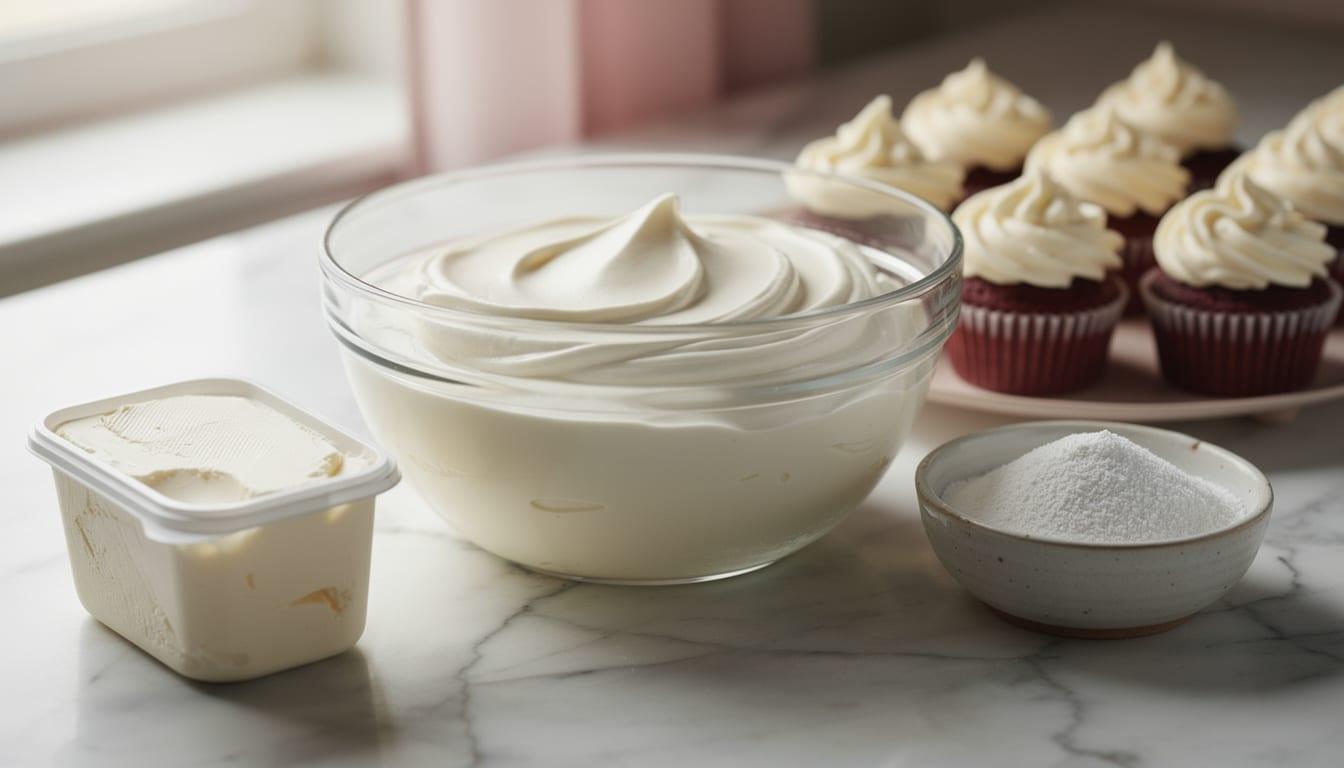
Why tub cream cheese makes runny frosting
American recipes are written for firm, foil-wrapped blocks of cream cheese. In the UK, cream cheese is mostly sold in soft, spreadable tubs, and Nigella’s site points to that switch in packaging as the reason so many people get runny frosting. Two things make it worse:
- Beating the cheese. Cream cheese gets thinner the more it is beaten. Recipes that start by creaming the cheese work with blocks but can turn tub cheese to soup.
- Warm cheese. Soft cheese straight from a warm kitchen has no firmness left to give.
If you can buy full-fat block cream cheese, use it: our stable cream cheese frosting recipe is written for blocks. The rest of this guide is for when tubs are all you can get.
A method that suits tub cheese
Nigella and Living on Cookies both change the mixing order for soft cheese: the butter and sugar are mixed first, and the cheese goes in last.
- Use full-fat cheese, straight from the fridge. Keep the cheese cold. Only the butter should be soft.
- Beat the soft butter and icing sugar (powdered sugar) together first, until fully combined. Living on Cookies adds the sugar a third at a time.
- Add cornflour now if you are using it, with any flavourings (see below).
- Add the cold cream cheese last, a little at a time. Nigella adds it in portions of about 3 tablespoons (50 g), mixing only until each one disappears.
- Stop as soon as it is smooth. Don’t keep beating to make it fluffy.
| Source | Butter : icing sugar : cream cheese | Thickener |
|---|---|---|
| Living on Cookies | 166 g : 400 g : 200 g (about 6 oz : 14 oz : 7 oz) | None; relies on the mixing order |
| Nigella (Nigella.com) | Not fixed; works with your recipe | 1 tsp cornflour per 100 g (3½ oz) of cream cheese |
Fix a batch that is already runny
| Problem | Try this | If it doesn’t work |
|---|---|---|
| A bit soft to pipe | Chill the bowl for about 30 minutes, then stir briefly | Use it as a filling or a spread on top instead of piping |
| Runny, not setting | Mix in 1 tsp cornflour per 100 g of cheese used, then chill (Nigella) | Add one more teaspoon of cornflour, then chill again |
| Soupy after long beating | Chill for 1 to 2 hours, then stir hard by hand (Living on Cookies) | Use it as a drizzle or glaze, and make a fresh batch with the method above |
Adding lots more icing sugar does thicken it, but it makes the frosting very sweet and loses the tang. Cornflour and chilling change the taste much less.
Keep it cold
Bring cupcakes out of the fridge a short while before serving if you prefer the frosting softer.
Frequently Asked Questions
Why is my cream cheese frosting so runny in the UK?
Most UK cream cheese comes in soft tubs, which are softer than the blocks American recipes use, and beating it makes it runnier. Mix the butter and icing sugar first and add cold cheese last.
Can I use Philadelphia from a tub for frosting?
Yes, full-fat tub cheese can work. Keep it fridge-cold, add it last in small amounts, mix only until smooth, and use a little cornflour if needed.
How much cornflour do I add to cream cheese frosting?
Nigella suggests 1 teaspoon of cornflour (cornstarch) for every 100 g of cream cheese, plus another teaspoon if it still runs, then chilling for about 30 minutes.
Can I leave cream cheese frosting out overnight?
No. Keep it in the fridge. US food safety guidance limits perishable food at room temperature to 2 hours, or 1 hour in hot weather.
Use the tool from this guide
Open the relevant CakeyTops tool and put the advice above to work straight away.
Keep reading
How to Fix Buttercream: Runny, Grainy, Split or Full of Bubbles
Find the first correction for the frosting already in your bowl, with separate advice for American and meringue buttercream.
ReferenceHow Much Buttercream for 12, 24 or 48 Cupcakes?
Choose a spread, classic swirl or tall finish, then calculate a batch in grams with a matching ingredient list.
TutorialHow to Pipe Buttercream on Cupcakes: Five Beginner Finishes
Match the nozzle to the finish, practise the hand movement and learn when to stop squeezing for a clean result.