
Chocolate Ganache Ratios Explained: Drip, Glaze, Filling, and Whipped Ganache
A chocolate-to-cream chart by weight, a worked gram example and temperature checks for drips, fillings and whipped frosting.
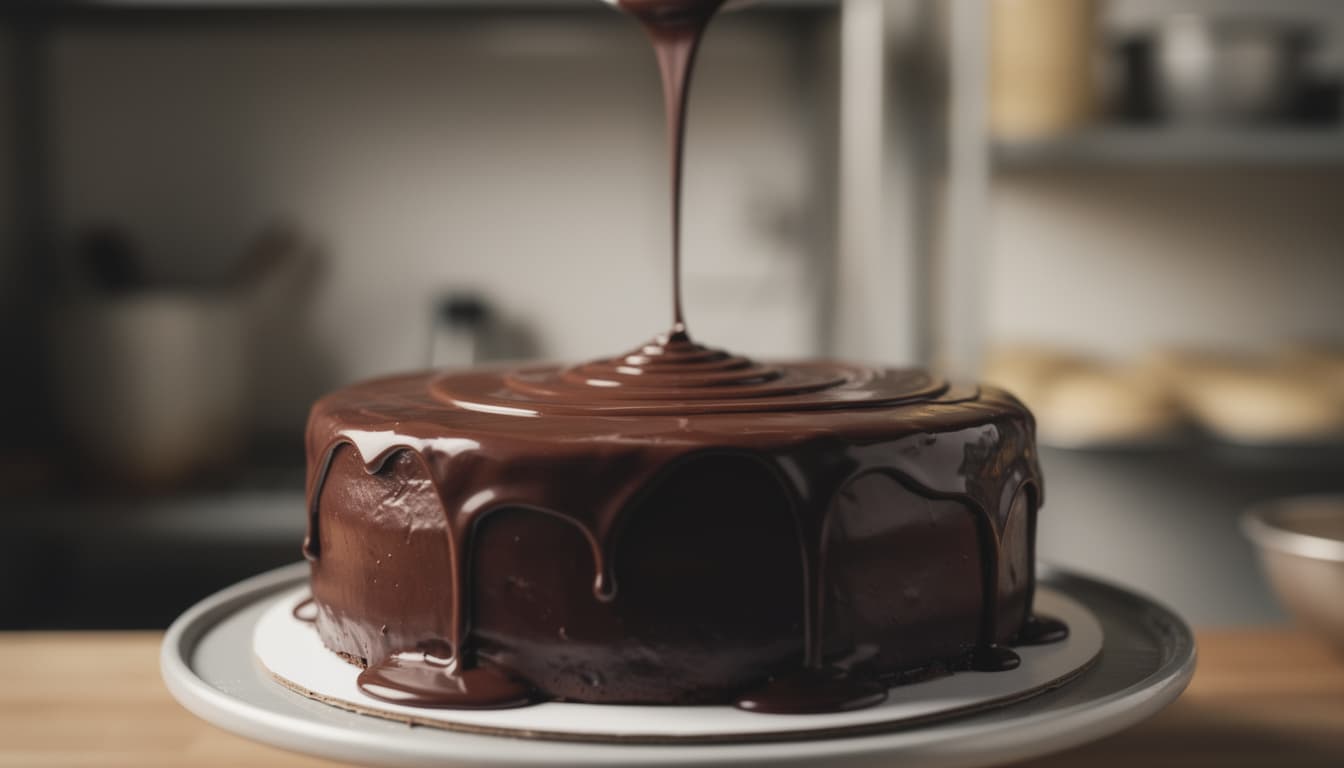
Ganache is simple in theory and surprisingly unforgiving in practice. Too much cream and it runs straight to the cake board. Too little and it sets like fudge before you can spread it. The fix is not guessing harder. It is using the right ratio for the job and remembering that the same ganache behaves differently warm, cool, and whipped.
What ganache actually is
Ganache is an emulsion of chocolate and cream. That sounds technical, but the practical meaning is simple: you are trying to persuade fat, liquid, and melted chocolate solids to behave like one smooth mixture. When the balance is right, ganache looks glossy and luxurious. When it is off, it feels greasy, grainy, or too loose.
The two levers you control are ratio and temperature. Ratio decides the range of textures you can get. Temperature decides where inside that range the ganache is sitting right now.
Chocolate-to-cream ratios by weight
| Use | Dark chocolate | Milk chocolate | White chocolate |
|---|---|---|---|
| Drip | 1 : 1 | 2 : 1 | 3 : 1 |
| Filling / Frosting | 3 : 2 | 5 : 2 | 3 : 1 |
| Whipped | 1 : 2 | 1 : 1 | 3 : 2 |
| Truffles / Piping | 2 : 1 | 3 : 1 | 4 : 1 |
Why dark, milk, and white chocolate do not use the same ratio
Darker chocolate contains less sugar and sets more firmly, so it can absorb more cream without turning sloppy. Milk and white chocolate are sweeter and softer when melted, so they need less cream to reach the same final consistency.
That is why a dark-chocolate drip that works at 1:1 would often be too loose if you copied the same ratio with white chocolate.
A worked example: 500g of 3:2 ganache
There are five parts in total: three chocolate and two cream. Divide 500g by five to get 100g per part. You need 300g chocolate and 200g cream. If instead you start with 200g chocolate, the cream is 200 × 2 ÷ 3, or about 133g, giving roughly 333g of ganache.
The ganache calculator uses the same ratio values as this chart. In “Split a batch” mode, enter the total ganache wanted, including chocolate and cream, rather than the chocolate weight alone.
How temperature changes the same bowl of ganache
A fresh bowl of ganache is not one fixed texture. The same mixture can behave three different ways depending on its temperature:
- Warm - fluid enough to pour, glaze, or drip
- Room temperature - thicker and ideal for spreading between layers
- Cold or fully set - firm enough for sandwich-cookie filling or whipping into frosting
This is why bakers sometimes think the ratio was wrong when the real issue was simply using the ganache too warm or too cold.
Choose the chocolate type, batch size, and end use to get the exact ingredient weights.
The easiest starting ratios to remember
Dark chocolate
Use equal weights for a drip, 3 parts chocolate to 2 parts cream for a filling, and 2 parts chocolate to 1 part cream for truffles. A 3:2 filling is a useful middle ground: warm it pours, cooled it spreads, and fully chilled it firms up.
Milk and white chocolate
Milk chocolate generally needs around 2 parts chocolate to 1 part cream for a drip; white chocolate starts around 3:1. This lower-cream balance compensates for the softer set of sweeter chocolate. Check the chart for filling, whipped, and truffle starting points.
Candy melts glaze
For cake drips made from candy melts rather than chocolate, Wilton's glaze formula is12 ounces candy melts plus 1/2 cup heavy cream. If it feels too thick, add cream a tablespoon at a time rather than jumping straight to a large correction.
How to make a drip that stops where you want it
The cleanest drips come from the combination of the right ganache and a chilled cake. If the buttercream is soft, even a decent ganache can slide farther than you want.
- Chill the frosted cake until the surface feels firm.
- Let the ganache cool slightly so it is fluid, not hot.
- Test one drip on the back edge first.
- Adjust before doing the front of the cake.
How to fix ganache when it is wrong
Too thin
Wait first. Ganache thickens noticeably as it cools. If it is still too thin after resting, add more chocolate in small increments.
Too thick
Warm it gently or add a small amount of hot cream. If the ganache has already cooled into a very stiff mass, beating it with a mixer can loosen it into a spreadable frosting.
Split or oily
This usually means the emulsion broke. Gentle reheating and slow stirring often rescues it. Going too hot is what causes many ganache disasters, so heat the cream to steaming, not violently boiling.
Where ganache fits in cake decorating
Ganache is particularly useful when you want a sharper, more stable finish than soft buttercream alone. To work out quantities for a whole cake, use the ganache calculator, which sizes the batch from your tin and splits it into chocolate and cream. The buttercream calculator and fondant calculator do the same for the rest of a bigger decorated cake workflow.
Frequently Asked Questions
What is the best ganache ratio for a drip cake?
For dark chocolate, start with equal weights of chocolate and cream. Milk chocolate usually needs about 2 parts chocolate to 1 part cream, and white chocolate about 3:1. Use the ganache slightly cooled on a chilled cake and test one drip before finishing the whole edge.
Why is my ganache running all the way down the cake?
Usually because it is too warm, too thin, or being poured onto buttercream that is not chilled enough. Ratio matters, but so does temperature. A correct ganache used too hot can still run to the board.
Does white chocolate need a different ganache ratio?
Yes. White chocolate is sweeter and softer when melted, so it needs less cream than dark chocolate. A common all-purpose starting point is 1 part cream to 3 parts white chocolate by weight.
Can I turn ganache into frosting?
Yes. Let the ganache cool until thick, then whip it. For candy melts whipped ganache, Wilton uses 12 ounces of melts with 3/4 cup cream, cooled to pudding consistency before whipping.
Should I measure ganache in cups or grams?
Grams are better. Chocolate and cream do not weigh the same per cup, so weighing the ingredients makes the ratio repeatable and much easier to scale.
Use the tool from this guide
Open the relevant CakeyTops tool and put the advice above to work straight away.
Keep reading
How to Cover a Cake with Fondant: A Beginner Guide
Start with a stable cake, measure the finished height and smooth the fondant in stages without stretching it.
GuideHow to Fix Buttercream: Runny, Grainy, Split or Full of Bubbles
Find the first correction for the frosting already in your bowl, with separate advice for American and meringue buttercream.
GuideHot-Weather Cake Decorating: Keep Buttercream and Toppers Stable
Summer is when cakes slump, buttercream slides, and fondant sweats. Here is how to choose heat-stable frostings, transport a cake safely in the heat, and keep your decorations standing until it is cut.