
Buttercream Dam: How High to Fill It So the Filling Stays In
Trusted guides disagree on whether filling should sit below or level with the dam. The answer depends on how soft your filling is.
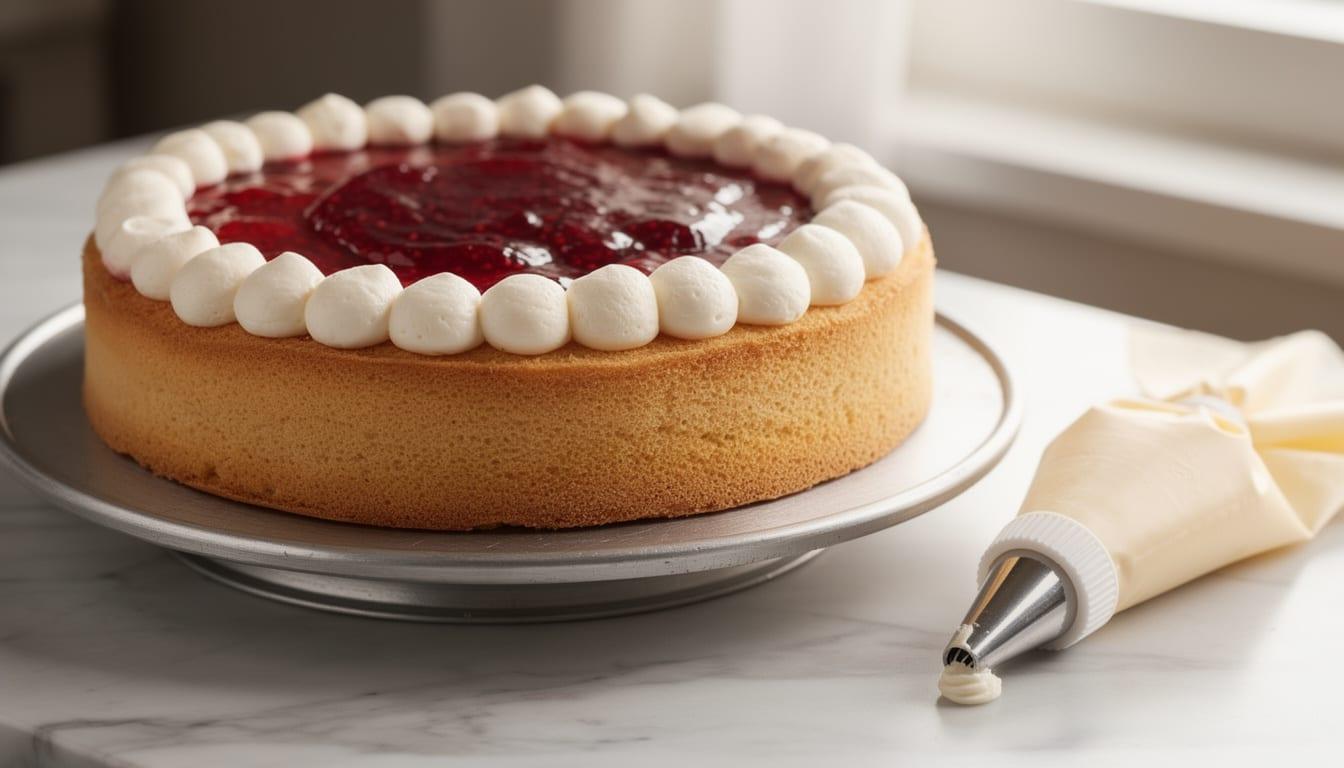
Why trusted guides disagree
A buttercream dam is a ring of stiff buttercream piped round the edge of a cake layer. The filling goes inside it, so it can’t squeeze out when the next layer goes on. Everyone agrees on the ring. They disagree on how full to make it.
| Source | What it says | What it is filling |
|---|---|---|
| British Girl Bakes | Keep the filling “well below” the top of the dam | Writing about bulges, where soft fillings cause most of the trouble |
| Sugar & Sparrow | Smooth the filling level with the top of the dam | Layer cakes filled with buttercream and similar fillings |
| Yumsto | A dam about 1 cm high and wide, with filling 2 to 3 mm below its top | Cream and soft fillings |
| King Arthur Baking | Chill the dam for 15 minutes so it firms up before filling | General layer cakes |
Both views make sense. The next layer presses down on the filling. A firm filling holds its shape under that weight, so it can sit level with the dam. A soft or wet filling spreads sideways and pushes against the dam, so it needs room to settle without reaching the edge.
How high to fill: go by the filling
| Filling | How high | Why |
|---|---|---|
| Buttercream, ganache, thick chocolate spread | Level with the top of the dam | Holds its shape under the weight of the next layer |
| Jam, lemon curd, fruit compote, caramel | A few millimetres (about ⅛ in) below the top | Runny fillings spread when pressed and creep under the dam |
| Fresh fruit pieces in buttercream or cream | Below the top, with fruit kept away from the dam | Fruit releases juice that can soften the ring from inside |
| Whipped cream or mousse | Below the top, and keep the cake chilled | Soft, and needs the fridge anyway |
If you are unsure, keep it a little low. A slightly thin filling is hard to notice once the cake is cut. A bulge or a leak shows on the outside.
Pipe a dam that holds
- Use stiff buttercream. Use the same buttercream as the outside, stiffened with a little more icing sugar (powdered sugar) if it is soft. A dam made from runny buttercream fails whatever you put in it.
- Pipe a thick ring just inside the edge. Yumsto suggests a round nozzle with an opening of about 1 cm (⅜ in), giving a ring about 1 cm high and wide, set about 5 mm in from the edge.
- Chill the ring before filling. King Arthur chills the dam for 15 minutes; Yumsto gives 10 to 15. A firm ring holds the filling better than a soft one.
- Fill, then add the next layer. Press it down gently and check it is level. Don’t push hard: that squeezes the filling out.
- Chill the filled cake before the crumb coat. Yumsto suggests 30 to 60 minutes, so everything settles before the outside is coated.
Enter your cake size and layers to see how much buttercream to make for the filling, dams and coat. Free.
Why a cake still bulges
A bulge is a ring of filling pushing out under the frosting, usually a day after decorating. The usual causes:
- The cake is settling. Fresh layers compress under their own weight for a while, which pushes the filling out. Chilling the filled cake before coating gives it time to settle first.
- The filling was too high or too soft for the dam (see the table above).
- Temperature changes. A cake that warms up after being chilled softens, and the dam softens with it.
If buttercream itself is the problem, splitting, too soft or full of air, see how to fix buttercream.
Frequently Asked Questions
Do I need a buttercream dam for a buttercream filling?
It helps but is less important. A firm buttercream filling can go right to the edge and be smoothed level. Dams matter most for jam, curd, fruit and cream fillings.
How thick should a buttercream dam be?
About 1 cm (⅜ in) high and wide is a common size, piped with a round nozzle about 1 cm across, just inside the edge of the layer.
Should I chill the dam before filling?
Yes. King Arthur Baking and Yumsto both chill the dam for about 10 to 15 minutes so it is firm before the filling goes in.
Why is my cake bulging in the middle of the sides?
Usually the filling is too soft or too high for the dam, or the cake settled after it was coated. Chill the filled cake for 30 to 60 minutes before the crumb coat, and keep soft fillings a little below the dam.
Use the tool from this guide
Open the relevant CakeyTops tool and put the advice above to work straight away.
Keep reading
How to Fix Buttercream: Runny, Grainy, Split or Full of Bubbles
Find the first correction for the frosting already in your bowl, with separate advice for American and meringue buttercream.
GuideHot-Weather Cake Decorating: Keep Buttercream and Toppers Stable
Summer is when cakes slump, buttercream slides, and fondant sweats. Here is how to choose heat-stable frostings, transport a cake safely in the heat, and keep your decorations standing until it is cut.
Guide11 Cake Baking Tips That Actually Make a Difference
Most cake failures trace back to the same handful of fixable mistakes. Here are eleven habits that reliably separate a beautiful bake from a dense, sunken, or stuck one.