
Baking Three Cake Tins at Once: Shelves, Swapping and Timing
Leave space round every tin, don’t touch them until they have set, and swap shelves about three-quarters of the way through.
Fan or conventional oven: it changes the answer
| Oven | How heat moves | Baking on two shelves |
|---|---|---|
| Fan (convection) | A fan blows hot air round, so the oven is more even | Works well. You may not need to swap, but most ovens still have warmer spots |
| Conventional (no fan) | Heat rises from the elements, so the top is usually hotter | Swap the tins between shelves partway through, once they have set |
Fan ovens usually bake hotter for the same setting, so UK recipes often give a lower fan temperature, such as 180°C conventional or 160°C fan (350°F, gas mark 4). Use the setting your recipe gives for your oven type.
Switch between conventional, fan, Fahrenheit and gas marks. Free.
Where to put three tins
- Check they fit with space round them. The Bake School suggests at least 1 inch (2.5 cm) between each tin and the oven walls. Tins pushed together or against the sides bake unevenly.
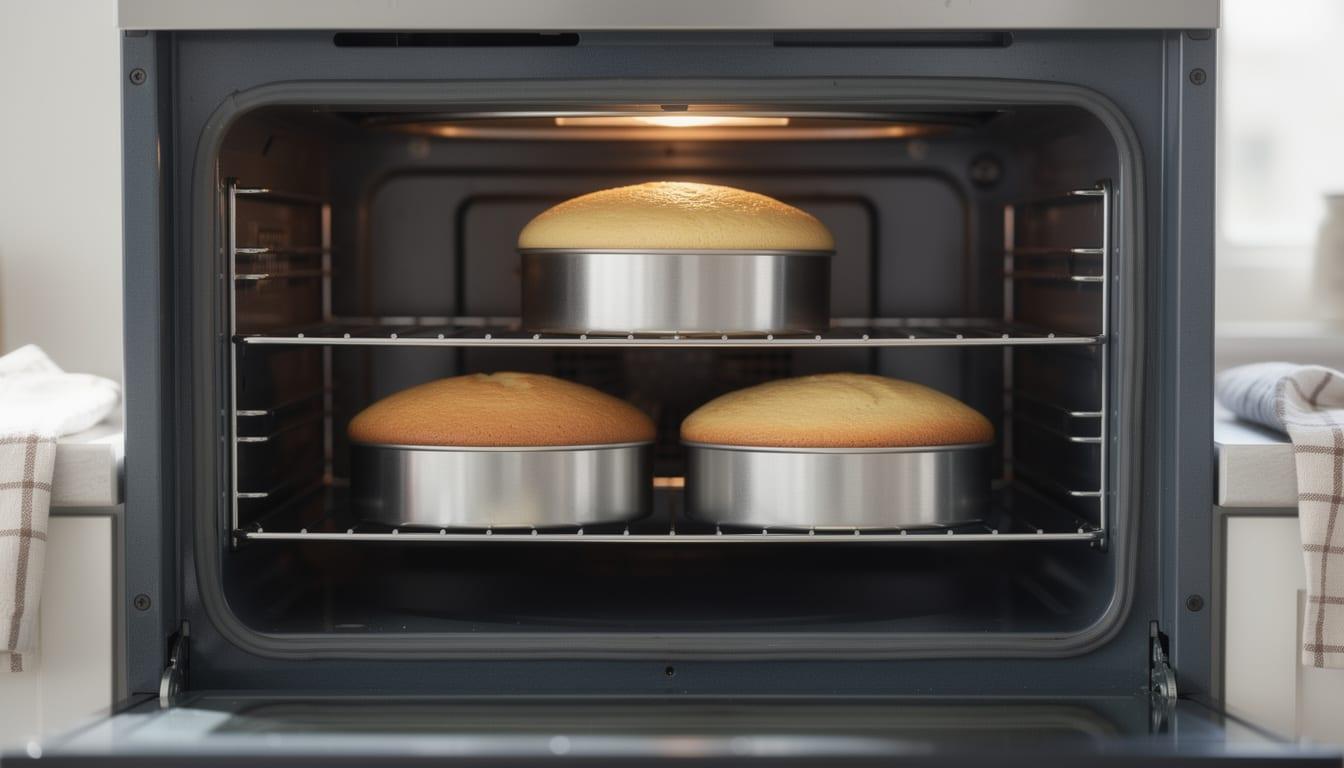
- Use two shelves near the middle. Put the shelves just above and just below the centre of the oven, rather than right at the top and bottom.
- Two on one shelf, one on the other. Stagger the tins so the top tins don’t sit directly above the bottom one, leaving room for heat to move round them.
- Fill the tins evenly. Weigh the batter into each tin so they bake at the same rate.
When it is safe to swap the tins
Opening the door lets heat out, and moving a cake before it has set can make it sink. Don’t touch the tins in the first part of the bake.
| Move | When | Source |
|---|---|---|
| Turn tins round on the same shelf | About two-thirds of the way through | Nigella |
| Swap tins between shelves | About three-quarters of the way through | Nigella |
| Any move | Not before two-thirds of the time, and only once mostly set | The Bake School |
These are guides, not exact times. Check the cakes rather than the clock: they are ready when the middle springs back when pressed lightly and a skewer comes out clean. With three tins in, the bake may take a little longer than the recipe says, so start checking at the recipe’s time and keep going.
When to bake in batches instead
If three tins won’t fit with space round them, or your oven is small or uneven, bake two tins and then the third. Baking powder starts working as soon as it is wet, so keep the wait short: leave the third tin somewhere cool and bake it as soon as there is room.
Two deeper tins can also replace three shallow ones, then be cut in half. The cake tin conversion guide shows how to scale between tin sizes.
Frequently Asked Questions
Can I bake three cake tins at once?
Yes, if they fit with about 1 inch (2.5 cm) of space round each one. Use two shelves near the middle and stagger the tins.
Do I need to swap cake tins between shelves?
In a conventional oven, yes: swap them about three-quarters of the way through, once the cakes have set. In a fan oven it may not be needed, but check your oven for hot spots.
Will cakes take longer with three tins in the oven?
They can. Start checking at the recipe’s time and go by the cake: it is done when the centre springs back and a skewer comes out clean.
Can cake batter wait while the first tins bake?
For a short time. Bake the waiting tin as soon as there is room, rather than leaving it for long.
Use the tool from this guide
Open the relevant CakeyTops tool and put the advice above to work straight away.
Keep reading
11 Cake Baking Tips That Actually Make a Difference
Most cake failures trace back to the same handful of fixable mistakes. Here are eleven habits that reliably separate a beautiful bake from a dense, sunken, or stuck one.
ReferenceCake Pan Conversion Guide: Scale a Recipe to Your Tin
Compare the working capacity of your tins, then scale the ingredients. Worked examples keep the layer depth and number of tins clear.
ReferenceCups to Grams for Cake Bakers: The Conversion Chart You’ll Actually Use
A cup of flour is not the same weight as a cup of sugar, and that is why so many cake conversions fail. Here is the ingredient-by-ingredient chart serious bakers actually need.