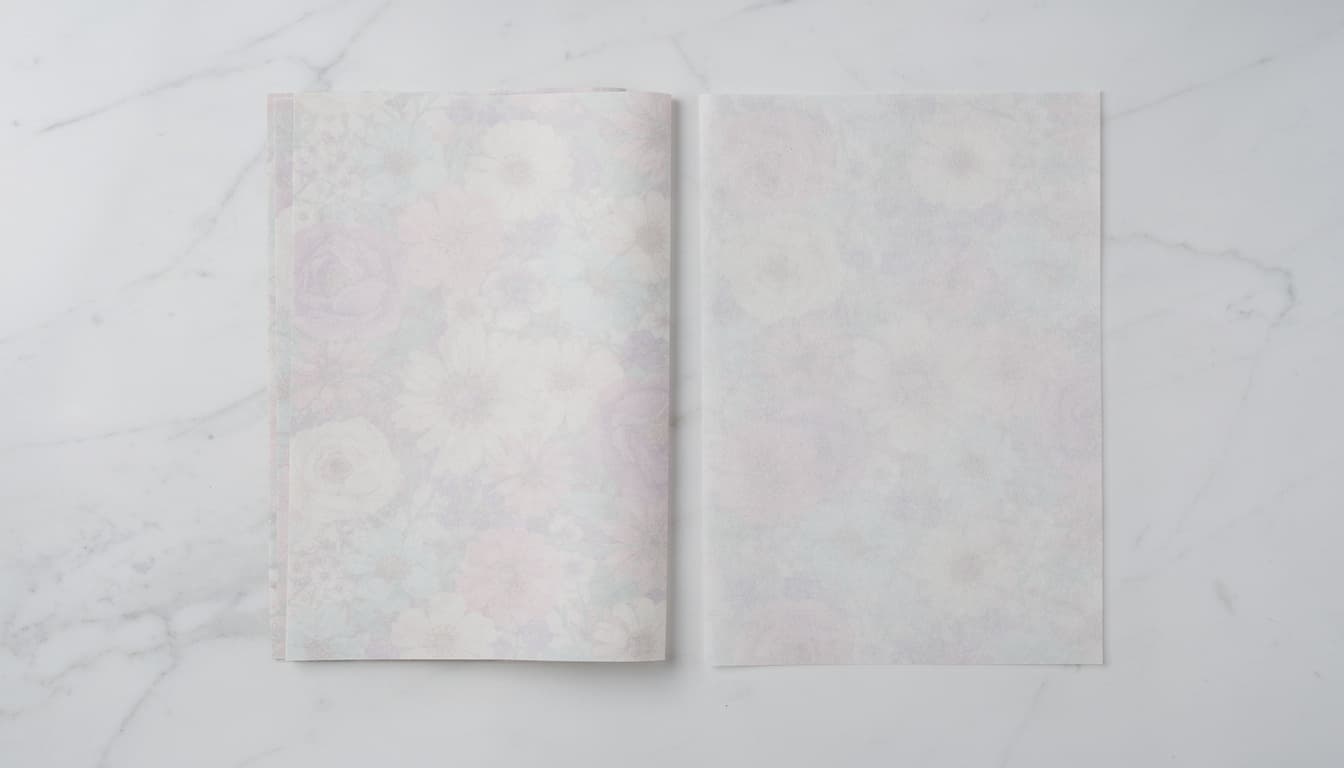
Icing Sheets vs Wafer Paper: Which Is Best for Cake Toppers?
Icing sheets and wafer paper both take an edible print, but they behave very differently. Here is a clear comparison of print quality, taste, durability, and cost — and which one to use for each kind of topper.
Last updated 6 min readBy CakeyTops Team
Which material suits your decoration?
Start with the intended finish, then check the sheet supplier’s instructions.
Your project
Start with
What to check
Photo or detailed logo on a flat cake
Icing sheet
Image resolution, sheet size and suitable cake coating.
Flat cupcake disc
Icing sheet, or wafer paper for a paper-like finish
A low, level frosting surface and moisture exposure.
Flower, sail or light shaped decoration
Wafer paper
Grade and thickness; thin paper and wafer card behave differently.
Cake with a filling that needs refrigeration
Storage follows the cake ingredients
Add moisture-sensitive prints later where practical.
Icing sheets and wafer paper both take an edible print, so bakers often treat them as interchangeable. Icing sheets generally give a smoother photo finish and soften on a compatible coating. Wafer paper gives a paper-like finish and can be shaped. Check the particular sheet grade, frosting and storage conditions before choosing.
What is the difference between icing sheets and wafer paper?
Icing sheets (also called frosting sheets) are a thin layer of icing on a backing sheet. They print bright, photo-realistic colour, and once applied they soften and blend into the cake's surface for a seamless finish. Wafer paper (also called rice paper) is a thin, edible sheet made from potato or rice starch. It is more like paper to handle and can hold a formed shape, which is why it is used for wafer flowers and stand-up pieces. Thin paper and thicker wafer card have different handling characteristics.
Icing sheets vs wafer paper compared
Icing sheets vs wafer paper for edible toppers
Factor
Icing sheets
Wafer paper
Print quality
Brightest, photo-realistic
Good, slightly more matte
Taste
Mild sweet icing
Almost flavourless, faint
Finish on cake
Softens on a compatible surface; often gives a flatter finish
Paper-like finish; may curl when exposed to moisture
Handling
Usually has a backing sheet; handle gently
Depends on grade: thin paper is more delicate than wafer card
Cost per sheet
Higher
Lower
Best for
Photo toppers, logos, cupcake discs
Volume runs, flowers, stand-up decorations
When should you use icing sheets?
Choose icing sheets when print quality is the priority: photo cakes, full-colour logos, portrait toppers, and cupcake discs where you want the image to look painted onto the cake. The trade-off is that they are more delicate to handle and cost more per sheet.
When should you use wafer paper?
Choose wafer paper for volume and structure. It is the more economical option when you are printing toppers in bulk. Check the thickness for your project: thin sheets can tear. Its ability to hold a formed shape makes it a useful choice for wafer flowers, butterflies, sails, and other stand-up decorations. The print can look softer or more matte than an icing sheet. A sample print is useful for fine lettering and detailed artwork.
Recommended Supplies
Our edible paper picks
Use sheets and edible inks compatible with your dedicated edible printer. Compare sheet grades and pack sizes for your photo toppers, flat discs or shaped decorations.
Affiliate disclosure: As an Amazon Associate I earn from qualifying purchases.
Used in our kitchenEdible printing
Edible Icing Sheets for Frosting Printing
The edible icing sheets we use for printed cake toppers, photo toppers, and repeated cupcake sheets.
These sheets give a clean finish, work well for photo toppers and cupcake sheets, and are the first option we point bakers to for edible prints.
Why we recommend it
Used in our own topper setup because the sheets feed cleanly and hold detail well for edible prints.
Photo toppers and edible cupcake sheets
A4 edible print workflows
Home bakers who want a dependable icing sheet option
EPS Edible Wafer Paper — Fine 0.3mm (100 A4 Sheets)
A 100-sheet pack of fine 0.3mm A4 edible wafer paper for printed toppers, wafer decorations, and high-volume print runs.
Wafer paper is the lighter, lower-cost alternative to icing sheets — it prints with edible printers, does not need a frosting backing, and the fine 0.3mm weight is ideal for wafer toppers and flowers. The 100-sheet pack is built for bakers printing toppers in volume rather than the odd one-off.
Why we recommend it
Cost-effective once you are printing toppers regularly, and sturdier to handle than icing sheets — just expect a slightly softer, more matte print than glossy frosting sheets.
High-volume edible topper printing
Wafer paper toppers, flowers, and cake wraps
Economy edible printing where cost per sheet matters
Test the material on the frosting you will actually use. A freshly piped swirl, a dry fondant surface and a chilled cake with condensation are different starting points. Avoid soaking either sheet, and follow the supplier’s advice on attachment and drying.
Unused sheets should stay protected according to their packaging instructions. For a finished cake, the filling and frosting decide safe storage. If the cake needs refrigeration, keep it chilled and add delicate printed decorations closer to serving where practical. Read the cupcake preparation guide for the full sequence.
Does the paper choice change how you prepare the artwork?
Not really — but both need enough resolution to print sharply. A blurry source image looks soft on either paper. Before you commit a sheet, run your design through the Edible Image Quality Checker to confirm it has the pixels for a clean print at your topper size, then prepare it in the cake topper maker. For the full home-printing walkthrough, see how to print edible cupcake toppers at home.
CakeyTops Tool
Edible Image Quality Checker
Check whether your image has enough pixels for a sharp edible print before you waste a sheet.
Is wafer paper or icing sheet better for cake toppers?+
Icing sheets generally suit detailed photos, logos and flat cupcake discs on a compatible coating. Wafer paper suits light shaped decorations such as flowers and sails. Check grade, thickness and moisture exposure; thin wafer paper is more delicate than wafer card.
Does wafer paper taste of anything?+
Wafer paper is almost flavourless with a very faint taste, similar to a communion wafer or the rice paper under macaroons. Icing sheets have a mild sweet icing flavour.
Can you print on both with the same edible printer?+
Both can be printed using a compatible dedicated edible printer and edible ink. Check sheet grade, feed settings and backing instructions with the supplier; never use ordinary printer ink on edible sheets.
Which is cheaper, icing sheets or wafer paper?+
Wafer paper is cheaper per sheet, which makes it the more economical choice for high-volume topper printing. Icing sheets cost more but deliver brighter, photo-realistic prints.
Why does my edible print look soft or blurry?+
Usually the source image does not have enough resolution for the print size, rather than the paper being at fault. Check the artwork in the Edible Image Quality Checker before printing — a clean 8-inch topper needs roughly 2400 pixels across.
Put the guide into practice
Use the tool from this guide
Open the relevant CakeyTops tool and put the advice above to work straight away.