Royal Icing Consistency: The Complete Guide (Flood, Pipe & Detail)
Almost every royal icing problem — broken flood, blown-out borders, craters — comes down to consistency. Here is the seconds test, the four working consistencies, and how to fix icing that is too thick or too thin.
7 min readBy CakeyTops Team
If your borders blow out, your flood icing tears, or your cookies dry with craters, the cause is almost always one thing: consistency. Royal icing is the same recipe at every stage — what changes is how much water you add. Get that right and decorating becomes predictable. Here is exactly how.
What is the royal icing seconds test?
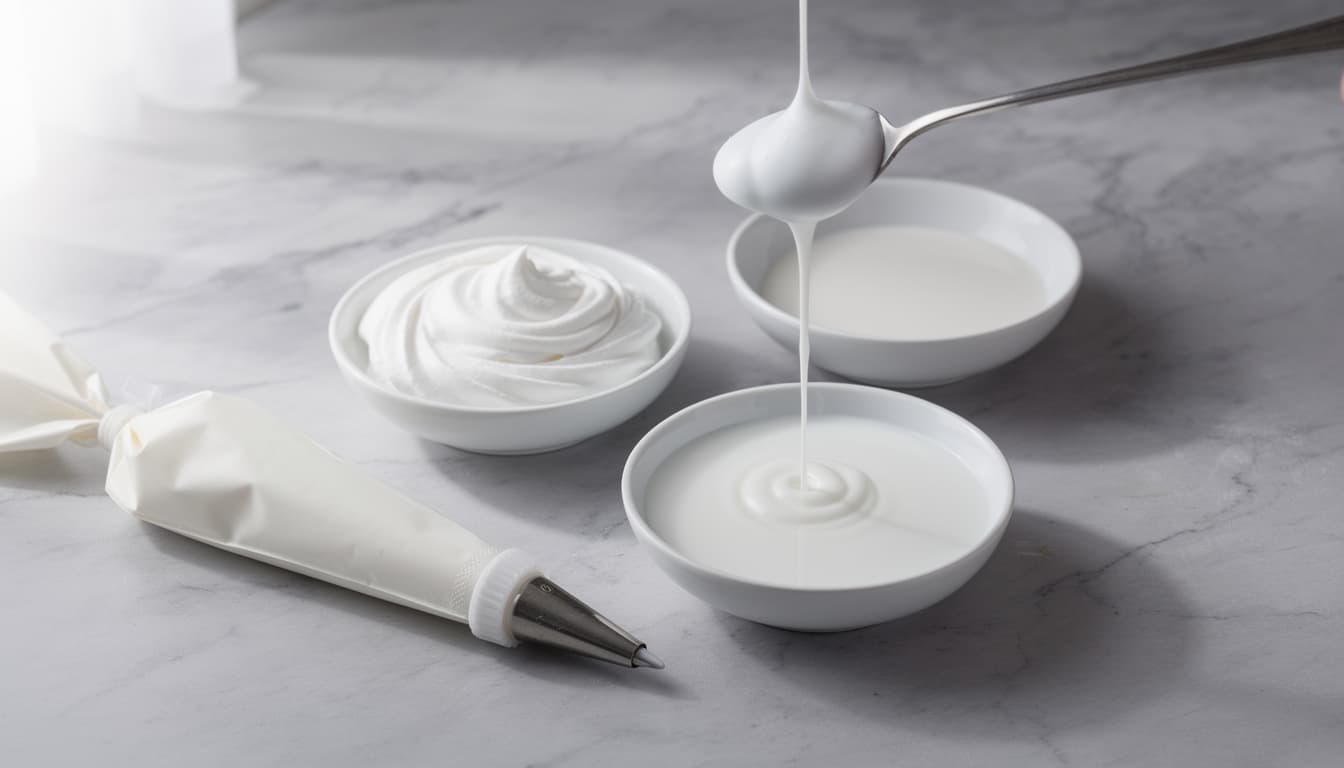
The seconds test is the standard way to judge consistency. Lift a spoonful of icing, let a ribbon fall back into the bowl, and count how long the ribbon takes to smooth back into the surface. Fewer seconds means thinner icing. It is more reliable than guessing by eye because it accounts for your specific recipe and humidity.
The four royal icing consistencies
Royal icing consistencies and what they are for
Consistency
Seconds test
Use it for
Stiff
Holds peaks, does not settle
Flowers, figures, 3D detail, stiff leaves
Piping
12–15 seconds
Outlines, borders, lettering, fine detail
Outline / medium
8–10 seconds
Outlining then flooding in one consistency
Flood
4–6 seconds
Filling areas with a smooth, self-levelling surface
How do you fix royal icing that is too thick or too thin?
1
Too thick (ribbon sits on top, tears when spread)
Add water a quarter-teaspoon at a time, stir gently to avoid whipping in air, and re-test. Thick icing causes craters, peaks that will not settle, and a lumpy surface.
2
Too thin (ribbon vanishes instantly, runs off edges)
Stir in a little sifted icing sugar, a teaspoon at a time, and rest it for a few minutes. Thin icing runs over borders, dries with a dull patchy finish, and bleeds colours into each other.
3
Air bubbles on the surface
Let the icing rest 15–30 minutes after colouring, stir slowly, and pop bubbles with a scribe or cocktail stick while the flood is still wet.
Why does my royal icing dry with craters or dents?
Craters usually mean the flood was too thick to self-level, or air bubbles were trapped and popped as it dried. Use a slightly thinner flood, tap the cookie gently on the counter to release bubbles, and dry under a fan or dehydrator for a smooth, shiny finish. Slow drying in humid air is the other common cause of dull, dented tops.
Royal icing for paint-your-own cookies
Paint-your-own cookies need a smooth, fully dried flood as the white “paper” for painting. A clean flood consistency and proper drying give the best painting surface. Once the base is dry, you stencil an outline and pair it with an edible paint palette — design one in our PYO Paint Palette Maker, included with a CakeyTops membership, and see the full method in our paint-your-own cookies guide. When you colour the icing itself, deep gel food colours keep the consistency stable far better than liquid colour.
CakeyTops Tool
PYO Paint Palette Maker
Turn a smooth white royal-icing cookie into a paint-your-own kit — design the edible palette with a CakeyTops membership.
Gel colour keeps the flood consistency you just dialled in, where liquid colour thins it. Disposable brushes are handy for fine detailing and for dropping into paint-your-own kits — check the listing notes for food-contact suitability first.
Affiliate disclosure: As an Amazon Associate I earn from qualifying purchases.
Used in our kitchenDecorating supplies
Sugarflair Rainbow Gel Food Colours (Set of 6)
Six concentrated gel food colours for buttercream, royal icing, sugarpaste, and cookie painting.
Sugarflair is a UK decorating staple. This six-colour starter set is highly concentrated, so a cocktail-stick dab goes a long way, and the colours deepen as they dry — which is exactly what you want for strong buttercream tones and deep PYO palette colours that still read after a wet brush.
Why we recommend it
The set we would point a new decorator to before they commit to forty individual pots — enough to mix most shades you actually need.
Colouring buttercream, royal icing, and sugarpaste
An 80-pack of disposable mini applicator brushes of the kind used to paint PYO cookies and to drop into ready-to-paint kits.
The cheapest way to put a brush in every paint-your-own kit. Being disposable, there is no washing up and no cross-contamination between customers — one brush per cookie. Confirm food-contact suitability on the listing before use, and treat them as short-contact painting brushes.
Why we recommend it
A handy bulk pack for kit-builders: one brush per cookie, no cleaning between orders. Check the listing notes for food-safe use before adding them to kits you sell.
What is the best royal icing consistency for beginners?+
Start with two consistencies: a 15-second icing for outlines and a 10-second icing for flooding. This two-bowl method is simpler than juggling four consistencies and handles most cookie designs cleanly.
How do you do the royal icing seconds test?+
Lift a spoonful, let a ribbon fall back into the bowl, and count how long it takes to smooth into the surface. Roughly 15 seconds is good for outlines, 10 seconds for flooding, and 4–6 seconds for a thin self-levelling flood.
How do you thin royal icing?+
Add water a quarter-teaspoon at a time, stirring gently to avoid adding air, then re-test with the seconds test. Small additions make a big difference, so go slowly to avoid overshooting into runny icing.
Why does my royal icing crater when it dries?+
Usually the flood was too thick to self-level or trapped air bubbles popped as it dried. Use a slightly thinner flood, tap out bubbles, and dry under a fan or dehydrator for a smooth, shiny finish.
Can I use one consistency for both outlining and flooding?+
Yes. A medium "outline" consistency of about 8–10 seconds can outline and then flood the same area. It is a popular time-saver, though separate consistencies give crisper borders on detailed designs.
Put the guide into practice
Use the tool from this guide
Open the relevant CakeyTops tool and put the advice above to work straight away.